
Digital visibility and online marketing dynamics have undergone a profound transformation in recent years. Metrics such as keywords and keyword density, which traditional SEO relied upon, have now been replaced by semantic interpretation and contextual relationships.
At the center of this shift are artificial intelligence systems capable of understanding and generating content by leveraging the power of Large Language Models (LLMs). This new architecture of search engines compels brands and content creators to move beyond the logic of traditional SEO and adopt AI Indexability strategies aligned with AI algorithms.
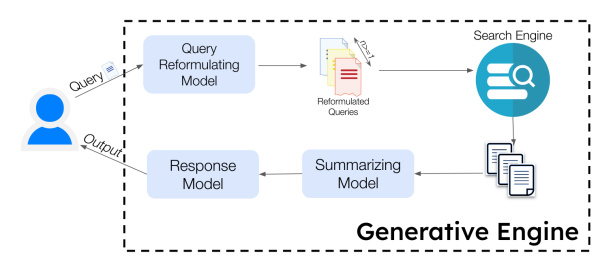
The key to this new era is a discipline called Generative Engine Optimization (GEO). GEO goes beyond SEO’s goal of “ranking high in search results,” aiming instead to make a brand or piece of content become part of an AI-generated answer, cited within it, or even recommended by it.
This represents a critical transformation redefining the core metrics and goals of digital marketing—because search is no longer just a click-driven action, but has evolved into a process of direct information access and brand awareness creation.
Fundamentals of LLMs: A Technical Perspective
A Large Language Model (LLM) is an AI system trained on massive datasets to acquire the ability to understand and generate human-like language. Leading examples include OpenAI’s GPT series and Google’s PaLM model. These models can parse complex linguistic structures, interpret user intent within context, and generate natural, fluent responses.
At the foundation of these models lie deep learning techniques and an architecture known as the transformer. Unlike traditional machine learning models, which process input word by word, LLMs evaluate content holistically and can therefore capture long-distance semantic relationships between words.
The most critical components of this architecture include vector embeddings and the attention mechanism.

Vector Embeddings: The Quantum Field of Meaning
The most fundamental technology that allows search engines to grasp the semantic richness of content is vector embeddings.
- In this process, text inputs are converted into dense vectors (numerical representations) in a high-dimensional space.
- Each word, sentence, or paragraph acquires a unique position within this vector space.
- This model captures not only the grammatical structure of language but also its semantic and syntactic meaning.
This technology enables search engines to understand content in contextual depth. Whereas traditional SEO focused on keyword matching, vector-based search measures the semantic proximity of concepts or sentences.
For example:
- A query like “best restaurant” no longer limits results only to pages containing those exact words.
- Instead, it can also retrieve results for queries such as “where can I eat delicious food?” or “a stylish place for dinner”, since these expressions are semantically similar.
The Attention Mechanism
Another core component of LLMs is the attention mechanism, which enables the model to focus on dependencies across different parts of a text.
- This is especially vital for long texts or complex queries.
- When processing one part of a sentence, the model calculates how much other parts contribute to understanding and assigns more weight to the most relevant ones.
- This allows the search engine to capture not just isolated sections but the entire context of the content, leading to a deeper grasp of user intent.
The Transformation in Search Engine Architecture: The Impact of BERT and MUM
Search giants like Google have integrated LLM technologies into their core algorithms, transforming both search and indexing processes. The most significant milestones of this integration are the adoption of models such as BERT and MUM.
BERT (Bidirectional Encoder Representations from Transformers)
Introduced by Google in 2019, BERT is an AI system designed to improve search results. Unlike earlier models that read text one-directionally (left-to-right or right-to-left), BERT processes text bidirectionally, enabling it to grasp the full meaning of a word within its context.
For instance, in a sentence containing the word “bank”, BERT can determine whether it refers to a riverbank or a financial institution.
MUM (Multitask Unified Model)
Announced in May 2021, MUM takes BERT’s functionality to the next level. It is significantly more powerful and flexible than BERT.
- Multimodal: MUM can process not just text but also images, video, and other formats simultaneously. For example, if a user uploads a photo of a plant and asks, “How do I grow this?”, MUM can analyze both the image and the question to provide a comprehensive answer.
- Multilingual: MUM can process 75+ languages at once, creating a bridge across languages. For example, it can interpret Spanish-language content and deliver it to an English-speaking user as relevant search information.
These advancements prove that SEO strategies can no longer rely solely on text-based keywords.
MUM’s multimodal capability means that visual content (images, videos) combined with text enhances how AI perceives and interprets content, making it richer and more comprehensive.
As a result, content is no longer ranked simply based on keywords but instead on context, semantic richness, expertise, and trustworthiness.
The DNA of AI Indexability Strategies: E-E-A-T and Semantic Integrity
To succeed in AI-powered search engines, content must not only provide information but also demonstrate experience, expertise, and trustworthiness.
At the core of this lies E-E-A-T (Experience, Expertise, Authoritativeness, Trustworthiness), which plays a central role in Google’s Quality Rater Guidelines. These guidelines rely on human feedback to refine algorithms, showing that E-E-A-T is not just an algorithmic signal but also a “human layer” shaping how AI defines content quality.
The Four Pillars of E-E-A-T: Building Trust and Authority
- Experience: Proof of first-hand, practical experience with a subject. For example, a product review that includes a personal usage video, or a how-to guide supported by step-by-step photos, shows that the content is grounded in real experience rather than theory. This highlights why AI-generated content, which lacks “experience,” can be problematic.
- Expertise: Demonstrates the author’s knowledge and skills on the topic. Author bios should include education, certifications, and professional experience, while citing academic studies, reputable institutions (.edu, .org), and official sources strengthens signals of expertise.
- Authoritativeness: Proof that the author or content is recognized as an authority in its field. Winning industry awards, being featured in media outlets, or receiving backlinks from well-established sites are key ways to build authoritativeness.
- Trustworthiness: Reflects the honesty and reputation of the page and the overall website. Providing transparent contact details, having a publication or correction policy, showing security certificates (SSL, Truste), and presenting clear author bios all boost the perception of trust.
Vector Search and Semantic Richness: Encoding the Meaning of Content
AI-driven search engines no longer index content based on keywords alone but on semantic meaning.
This means content must:
- Go beyond keyword stuffing.
- Be enriched with context.
- Anticipate user questions.
- Incorporate varied expressions to reflect different ways of asking the same thing.
When a search engine can correctly identify user intent (informational, navigational, transactional, etc.), the result is a better user experience with:
- Lower bounce rates
- Longer time spent on site
These engagement signals serve as additional proof for AI algorithms that the content is valuable and relevant.
Structured Data (Schema.org): A Roadmap for AI
Schema.org can be defined as a shared vocabulary that provides search engines with direct information about your web page’s content, helping them interpret it more accurately.
While schema is not a direct ranking factor, it allows pages to appear as rich snippets—visually enhanced search results that improve CTR (click-through rate).
Search engines know that HTML tags alone cannot clarify meaning. For instance:
<h1>Avatar</h1>This does not specify whether “Avatar” is a movie, a profile picture, or something else. Schema removes this ambiguity, enabling AI to interpret content correctly.
Google prefers the JSON-LD format, thanks to its easy implementation and maintenance.
One of schema’s greatest strengths is its ability to enhance a brand’s or entity’s presence in Google’s Knowledge Graph, helping AI connect content with other trusted sources.
Especially for local SEO, marking up information such as business name, address, and phone number (NAP) with the LocalBusiness schema ensures AI can confidently use this data and highlight the business in rich local results.
Generative Engine Optimization (GEO): The Brand Strategy of the Future
Search Engine Optimization (SEO) traditionally focused on optimizing content to rank higher in search results. However, with the integration of LLMs into search engines, the concept of “ranking” has shifted to “being cited and displayed.”
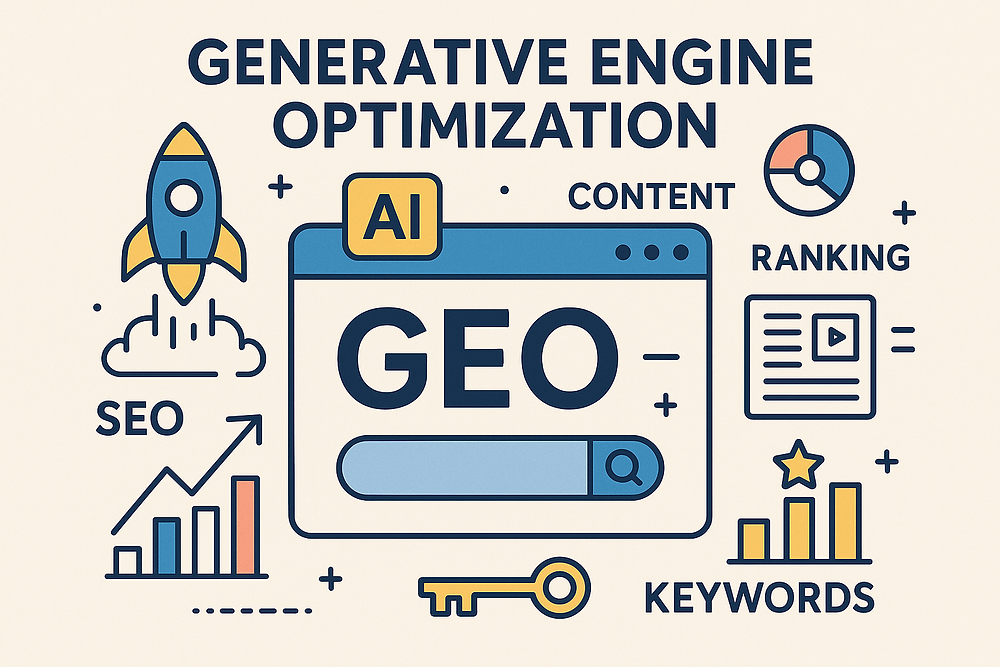
Generative Engine Optimization (GEO) refers to optimization practices that aim to make a brand or its content become a direct part of an AI-generated answer.
From SEO to GEO: A Paradigm Shift
| Criteria | Traditional SEO | Generative Engine Optimization (GEO) |
|---|---|---|
| Focus | Ranking at the top of search results | Being cited or recommended in an AI response |
| Core Metric | Organic traffic, ranking position, CTR | Brand mentions by AI, impressions, sentiment analysis |
| Content Goal | Keyword-rich text optimized for search engines | Easily parsable, semantically rich, prompt-friendly content for LLMs |
| Keyword Strategy | Keyword volume & difficulty analysis | Focus on conversational queries and multi-step intents |
| Indexing Logic | Static indexing via crawlers | Contextual memory where AI “remembers” content and uses it as reference |
| User Interaction | Clicks and on-site engagement | Multi-step conversations and follow-up questions |
In this new paradigm, search queries can be up to five times longer than traditional ones, with users often asking multiple follow-up questions to refine their answers.
This evolution is turning LLMs from simple search tools into personal advisors and recommenders. GEO, therefore, represents an entirely new market.
Even leading SEO tools such as Ahrefs and Semrush are quickly adapting, introducing features that track AI-driven brand mentions and visibility in LLMs.
Content Structuring for AI Responses
AI models prefer well-structured, easily analyzable content. As such, content strategy must go beyond the rules of traditional blogging.
- Clear Headings and Subheadings: Break content into logical sections and label each with descriptive titles, making it easier for AI to parse and reuse.
- Summaries and Comprehensive Content: Start each piece with a short paragraph summarizing the key takeaways. Each paragraph should stand alone, suitable for being quoted as part of an answer.
- Highlighted & Quotable Phrases: Use signals like “In summary,” or “The key takeaway is” to help AI identify crucial sections.
- Bulleted and Numbered Lists: While constant listing may look unnatural in a blog post, AI digests structured lists more effectively. They also increase the likelihood of your content appearing in AI-generated bullet summaries, improving both readability and visibility.
Local Search and AI: Putting Your Business on the Map
The rise of AI has also transformed local marketing. Traditional local SEO focused on keywords and Google Maps pack results, while AI has reshaped how users discover local businesses.
AI-Driven Local Search Dynamics
Features like Google’s AI Overviews (SGE) provide AI-generated summaries at the very top of search results.
For example:
- When a user searches “best Italian restaurant near me,” AI may generate a summary including opening hours, reviews, and location details.
- These zero-click results reduce the need for users to visit multiple websites before making a decision.
For local businesses, this introduces a new success metric: the goal is no longer just “getting the click” but appearing in AI summaries.
Integrating GEO and Local SEO: Building a Network of Trust
AI does not rely solely on information from a business’s website. It also cross-references trusted third-party directories (Google Business Profile, Yelp, Bing Places, etc.).
If business details are inconsistent across these directories (e.g., an outdated phone number), AI may hesitate to feature the business prominently. Consistency is thus a core trust signal for local GEO.
- NAP Consistency: Ensure that Name, Address, and Phone (NAP) are 100% consistent across the website, Google Business Profile, and all directories.
- Google Business Profile Optimization: This is AI’s primary data source. Fill it out completely, keep it updated, and use keyword-rich descriptions.
Reviews and Sentiment Analysis: Reputation Through AI’s Eyes
AI evaluates a business’s reputation and perception among users by analyzing reviews and ratings.
Reviews are no longer just social proof—they are now critical AI ranking signals.
AI categorizes reviews by sentiment (positive/negative) and topic (e.g., product quality, service speed), then uses this as a data point to assess reputation.
- AI-powered review management tools can analyze thousands of reviews to identify customer preferences and sentiment trends.
- Responding promptly and professionally to all reviews (positive and negative) signals to Google and AI that the business is active and customer-focused.
Action-Oriented Recommendations and Conclusion
To succeed in this new order defined by AI-powered search engines, brands must restructure both their content and digital presence. The following action plan translates theoretical insights into a practical roadmap:
| Strategy Area | Goal | Action Steps | Example Metrics |
|---|---|---|---|
| Content Structuring | Create content easily digestible by AI | Add a clear summary to every article. Use clear headings and subheadings. Write short, self-contained paragraphs. Incorporate bullet points and numbered lists. | Number of AI-cited pieces, frequency of appearance in AI summaries |
| E-E-A-T Signals | Increase credibility and authoritativeness of on-site content | Add author bios with education, certifications, and experience. Create content backed by real data and first-hand experiences. Cite and link to credible sources. | Google Quality Rater scores (if available), organic traffic growth, brand awareness survey results |
| Structured Data (Schema) | Provide contextual clarity & qualify for rich results | Use JSON-LD format for Article, FAQ, LocalBusiness schemas. Strengthen Knowledge Graph presence by linking relevant entities. | Rich snippet visibility rate, CTR improvements |
| Local SEO & Reputation Management | Achieve dominance in local searches & AI summaries | Standardize NAP info across all directories. Optimize Google Business Profile. Use AI-powered tools to reply to reviews and conduct sentiment analysis. | Frequency in AI local summaries, Google Maps ratings & review count, local search rankings |
Blog Writing and SEO-Friendly Content Guidelines
As emphasized, content must read naturally, like human writing. This is a critical aspect of AI-focused strategies.
- AI can be a powerful assistant for drafting, keyword research, and data analysis.
- However, AI cannot replicate “Experience” or “Trustworthiness”, two core pillars of E-E-A-T.
- The role of a human expert is therefore crucial—to review AI drafts, refine them, integrate personal experience, and bring a unique perspective.
In this new era, the most important role of content marketers is to act as a “Human Filter.”
Roadmap to Becoming Future-Ready
LLM-powered search engines have brought an irreversible transformation to the world of search and marketing.
The path to building a successful digital presence now depends not just on applying traditional SEO techniques but on creating content that delivers value, reliability, and expertise.
Such content not only gains visibility in search results but also fosters user loyalty and strengthens brand trust.
At KAAS Digital, we closely follow this transformation with the Generative Engine Optimization (GEO) strategies we develop for our brands. We guide businesses aiming to establish authority in AI-powered search engines.
Brands that adopt GEO strategies will not only remain visible in this rapidly changing environment but also become trusted authorities.
👉 If you want your brand to build a future-ready, AI-friendly digital presence, get in touch with us today.
Frequently Asked Questions (FAQ)
1. Should we shift our SEO budget entirely to GEO, or run them together?
SEO still holds great importance today. Search engines continue to rely on technical SEO signals such as site speed, mobile compatibility, indexability, and high-quality backlinks.
GEO does not replace SEO but works alongside it to increase visibility. The best strategy is to maintain your existing SEO investments while integrating GEO. This way, you can remain competitive in traditional search rankings and appear in AI-powered “zero-click” responses.
2. How does AI-generated content affect E-E-A-T criteria?
AI tools are highly effective at aggregating information and drafting content. However, AI models by nature lack “Experience” (E).
This poses risks, particularly for YMYL (Your Money or Your Life) topics such as finance, health, and law. For this reason, AI-generated content must be reviewed and enriched by a human expert with personal insights.
Google also recommends that AI-produced content be evaluated by humans for usefulness, accuracy, and alignment with quality guidelines.
3. Does vector search mean the end of technical SEO?
No. Vector search is not the end of technical SEO—in fact, it increases the importance of semantic structure and schema markup.
Before indexing a page, search engines still follow processes of crawling, rendering, and interpreting.
- Elements like robots.txt, sitemaps, and page speed remain critical for efficient discovery and indexing.
- Structured data (Schema.org) further strengthens vector search by clarifying context and relationships between entities, helping AI interpret content more accurately.
4. What is the most important AI Indexability strategy for local businesses?
The most crucial AI Indexability strategy for local businesses is ensuring consistency and trust across digital assets.
AI does not rely only on a website but also verifies business details through Google Business Profile and other trusted directories.
- 100% NAP consistency (Name, Address, Phone) across all platforms is essential.
- Continuously gathering positive reviews and responding professionally to all feedback signals to AI that the business is active, reputable, and trustworthy.
5. How can we measure performance for brand mentions?
Traditional SEO tools typically track mentions only via backlinks. New AI-focused tools, however, measure a brand’s visibility and citation frequency within LLMs such as ChatGPT, Perplexity, Gemini, and Claude.
- Tools like Semrush’s Enterprise AI Optimization and Ahrefs’ Brand Radar now provide insights into a brand’s share of AI search results, sentiment analysis (positive/negative), and positioning against competitors.
- These tools allow marketers to assess the effectiveness of their GEO strategies with concrete, data-driven metrics.